



Imagine this. It is Monday morning, and your inbox is already full of so-called quick questions from three different clients. Your task list is packed, yet you feel pressured to reply immediately. By late morning, you are switching constantly between deep work and client messages while worrying about missed deadlines.
This experience is common among freelancers, startups and agencies. Many deliver excellent results but still struggle with client retention. The problem is rarely the quality of work. More often, it is the absence of clear and consistent client communication systems.
Strong client boundaries are not about being rigid or impersonal. They create clarity, predictability and trust. When professional communication is structured into systems, clients know what to expect and feel more confident working with you.
An effective client communication system helps you:
- Reduce misunderstandings and rework
- Protect focus and working hours
- Improve client management across projects
- Retain clients without burnout
This guide explains five essential communication boundaries, supported by real-world examples, communication templates and practical steps you can apply immediately.
Table of Contents

1. Response Time and Availability: Turning Chaos into Calm
The story
Sarah is a freelance designer who believes that fast replies equal good service. She responded instantly to every email and Slack message. Over time, the constant interruptions affected her productivity and increased stress. Her professional communication became reactive rather than thoughtful, and clients began to notice.
The solution
Sarah introduced clear response time rules as part of her client communication system:
- Emails answered within 24 business hours
- Chat messages answered within four business hours
- Urgent matters handled through scheduled calls
By setting expectations during onboarding, clients felt supported while Sarah regained control of her time.
Implementation steps
- Define realistic response windows in proposals and onboarding documents
- Use automated replies outside working hours
- Acknowledge messages politely when immediate resolution is not possible
Mini case study
After introducing response boundaries, Sarah regained more than ten hours each week. Clients reported higher satisfaction because her responses were clearer and more considered, which directly improved client retention.

External link:https://blog.hubspot.com/service/customer-response-time
2. Scope and Revision Limits: Preventing Scope Creep Early
The story
James runs a small marketing agency. Clients often requested just one more tweak, which slowly added unpaid hours to every project. Scope creep reduced profitability and created tension on both sides.
The solution
James clarified scope boundaries within his client management system:
- Clearly defined deliverables
- Two rounds of revisions included
- Additional changes are handled through a transparent change request process
Clear client boundaries turned difficult conversations into straightforward agreements.
Implementation steps
- Document scope and revision limits in every contract
- Use communication templates for out-of-scope requests
- Track revisions centrally to avoid disputes
Mini case study
After implementing scope creep prevention measures, James increased average project margins by 12 per cent while also improving client satisfaction.

Read Why clear contracts are essential for business growth
3. Single Source of Truth: Centralising Communication for Clarity
The story
Alex leads a remote team that shares files through email, chat tools and cloud storage. Feedback was often lost, outdated files circulated, and deadlines slipped. Clients became frustrated by the lack of clarity.
The solution
Alex created a single project hub where all files, feedback and approvals lived. This hub became the foundation of a reliable client communication system. Any feedback shared outside the hub was not considered valid.
Implementation steps
- Choose one platform for documents, feedback and approvals
- Give clients structured access to the hub
- Use version control and consistent file naming
Mini case study
Within two months, lost attachments dropped to zero and approval cycles improved by 35 per cent. Clients valued having one clear place to reference project progress.

Check out Productivity systems for remote workers
External link:https://basecamp.com/guides/project-management
4. Structured Feedback and Approval: Replacing Vague Requests
The story
Lina regularly received feedback such as make it pop or I am not sure. Without specific direction, projects stalled and revisions multiplied.
The solution
She introduced structured feedback forms into her professional communication system:
- Clear approve or revise options
- Bullet-pointed change requests
- One named decision-maker for final approval
Implementation steps
- Attach a feedback form to every delivery
- Set response deadlines, such as three business days
- Use short clarification calls only when necessary
Mini case study
With structured feedback in place, revision cycles dropped from four to two per project. Delivery times improved, and client retention increased.

Read smarter decisions less guesswork
External link:https://www.typeform.com/templates/feedback-forms/
5. Scheduling, Office Hours and Escalation: Protecting Deep Work
The story
Unplanned calls and messages interrupted focused work throughout the day. Teams worked later into the evening, and stress levels increased.
The solution
Agencies introduced structured scheduling and escalation paths:
- Meetings booked through scheduling tools
- Clearly defined office hours
- Specific criteria for urgent escalations
Implementation steps
- Publish office hours and booking links
- Decline unscheduled calls politely
- Require agendas for all meetings
Mini case study
One agency reclaimed 20 per cent of weekly working hours after introducing office hours and scheduling rules. Team morale improved alongside client trust.

Learn how to scale without burnout
External link:https://www.calendly.com/blog/scheduling-meetings-best-practices/
Bringing It All Together
A strong client communication system turns boundaries into long-term business assets.
| Boundary | Benefit | Outcome |
| Response time | Reduced stress | Clients feel heard |
| Scope and revisions | Fewer disputes | Predictable delivery |
| Single source of truth | Less confusion | Faster approvals |
| Structured feedback | Clear direction | Fewer revisions |
| Office hours | Protected focus | Stronger trust |
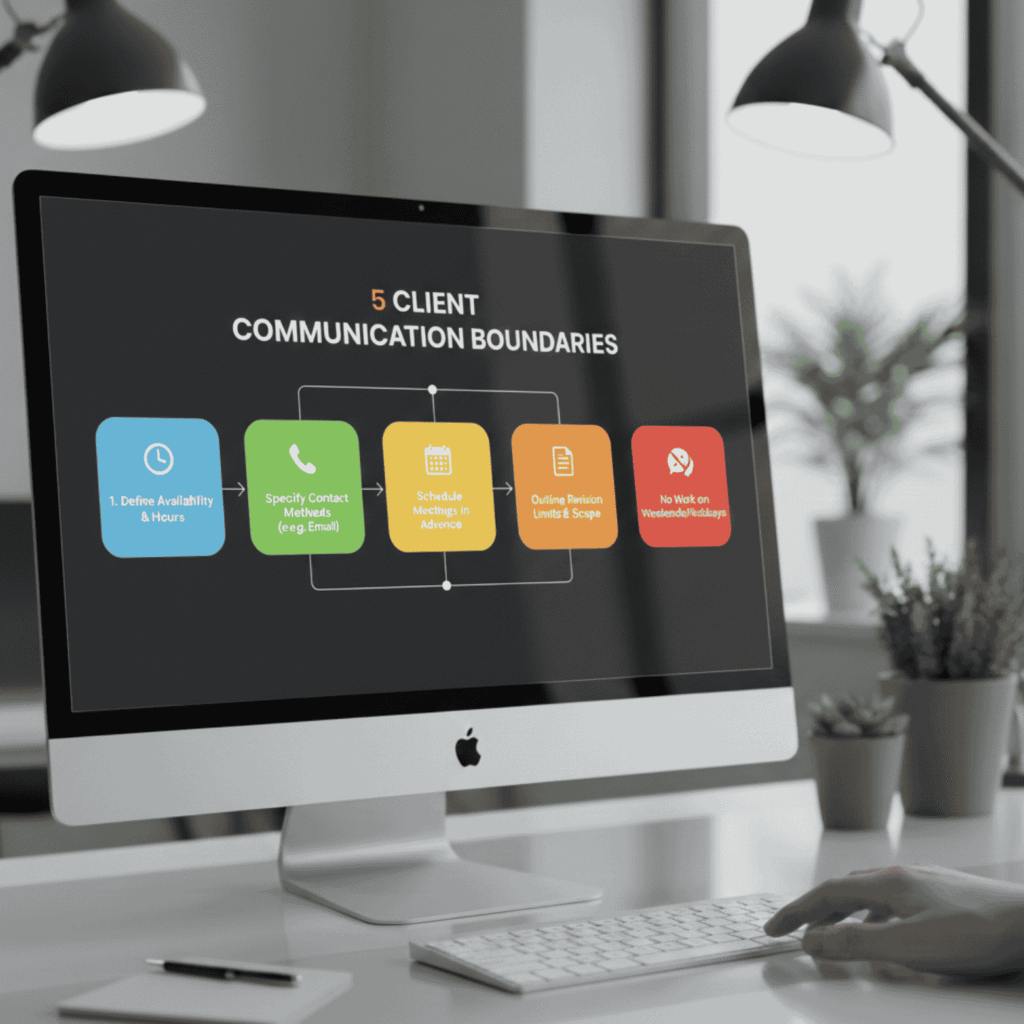
Final Takeaway
Client boundaries are one of the strongest drivers of sustainable client retention. When professional communication is built into clear systems, expectations are managed, trust grows, and long-term relationships become easier to maintain. Start small, document your processes and refine your client communication systems as your business scales.