


A sustainable creator doesn’t hustle aimlessly. They design systems, guardrails, and rituals that let momentum compound without burnout. This guide unpacks practical habits, frameworks, and tools that help you build momentum online while maintaining creative balance, wellness, and energy.
Table of Contents
Momentum vs. Burnout: A Quick Diagnostic
Momentum feels like consistent output and steady creative growth. Burnout, on the other hand, feels like exhaustion, avoidance, and a loss of curiosity. The difference lies in whether your creative systems protect your energy.
If you are struggling to keep up, you don’t need more willpower; you need a better rhythm.
The TNT Framework for Sustainable Creation
- Transform: Replace reactive work with intentional priorities.
- Navigate: Build predictable systems to steer projects with less friction.
- Thrive: Design revenue and rest structures that keep you creative in the long term.
These three pillars help any sustainable creator maintain consistency without collapse.
Focus on the “Small Set”
Momentum grows fastest when your attention is not divided. Many creators burn out because they try to be everywhere at once. To fix this, you need to choose your “Small Set”, the two or three priorities that actually move the needle for you.
Take a moment to list every platform you use. Rank them by how much money, joy, or growth they actually bring you. For the next 90 days, commit only to the top two or three. This clarity prevents creator burnout and fuels creative balance.
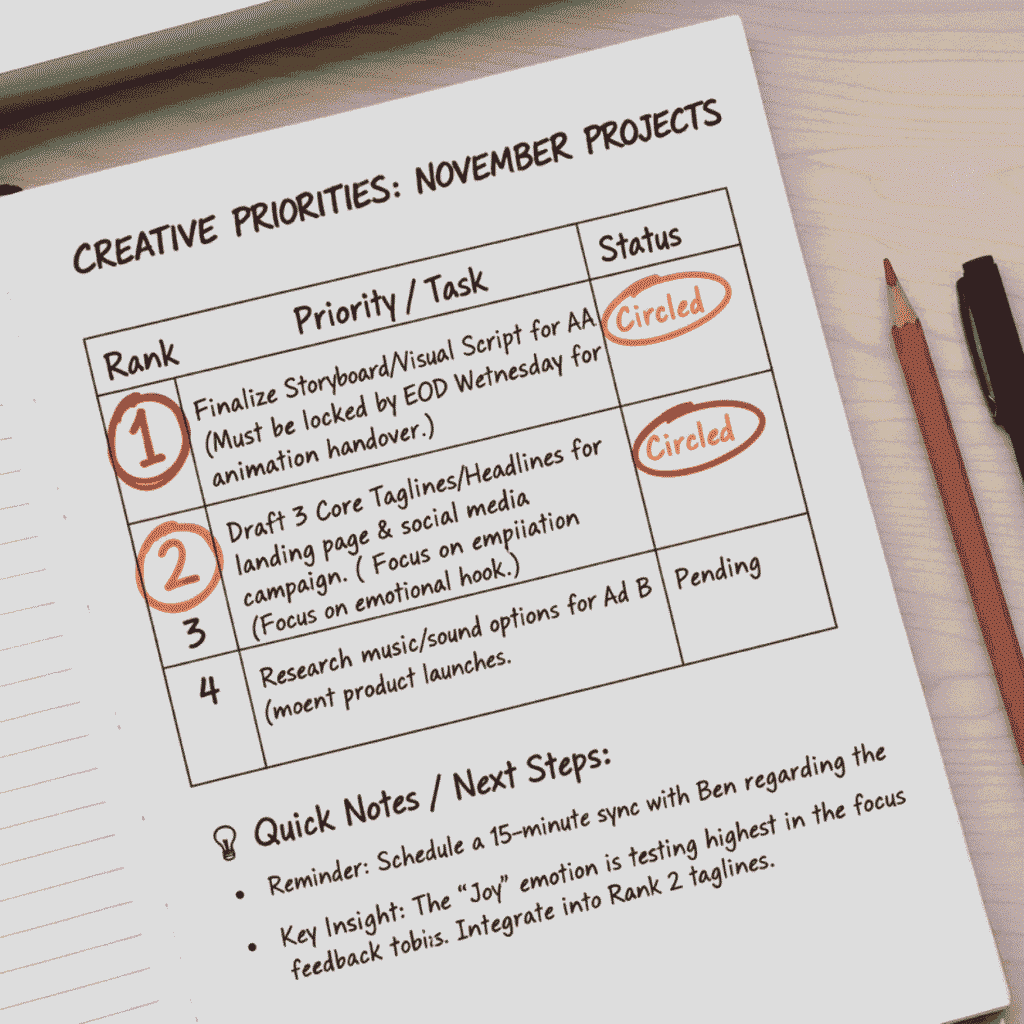
Notebook page showing top creative priorities
Systems That Reduce Reliance on Willpower
Momentum thrives on systems, not motivation. Build operational structures that remove daily decision fatigue:
- Establish an editorial rhythm: Pick a publishing schedule you can actually keep, even on your busiest weeks.
- Create a repurposing pipeline: Take one big piece of content and break it into smaller posts for other platforms.
- Run small experiments: Test new ideas or offers frequently but on a small scale to see what sticks without the pressure of a big launch.
Use a Notion or ClickUp template to document and iterate on these systems.
For deeper workflow templates, see Productivity Systems for Remote Workers: 7 Ways to Streamline Your Workflow. It shows how editorial cadence, task flow, and async systems prevent burnout at scale.
Time and Energy Architecture
A sustainable creator respects their natural internal clock. Instead of just listing tasks, try “Energy Architecture.” Match your hardest work to your highest energy levels.
- High Energy: Use this time for deep creative work, like writing or filming.
- Medium Energy: Use this for community engagement and responding to feedback.
- Low Energy: Use this for administrative tasks or cleaning up your files
When your calendar aligns with your energy curve, you can build momentum online without depleting your focus reserves.
Rest Is Strategic, Not Optional
Rest is not “dead time.” It is the period when your brain recovers and finds new inspiration. Without intentional rest, your curiosity—the raw fuel of your work—will eventually run dry. Try setting a “digital Sabbath” where you stay screen-free for 24 hours once a week, or schedule a “creative exploration” day once a month to try something new just for fun.

Creator enjoying an unplugged day outdoors
Margins Build Resilience
Life is unpredictable. If your schedule is packed at 100% capacity, one small delay can cause a total collapse. Building “margins” means leaving at least 20% of your time as a buffer. Add extra days to your launch timelines and keep at least one day a month completely unscheduled. This extra space makes you resilient to stress.
Learn to structure flexible systems in Scale Without Burnout: Build Smarter Processes.
Community That Supports, Not Drains
A community should give you energy, not drain it. Focus on building small, high-quality groups for feedback rather than trying to manage a massive, unorganised crowd. By setting clear expectations and hosting simple rituals like weekly recaps, you can turn your audience into a source of inspiration.
A thriving community fuels creator wellness and amplifies growth.
For more tactical advice on keeping your social growth steady, read through Buffer’s community management strategies. Their resources provide excellent templates for posting in a way that respects your mental health.
Money Systems for Long-Term Stability
A sustainable creator designs income like systems, recurring, predictable, and light to maintain:
- Paid newsletters via ConvertKit or Substack.
- Memberships with clear value tiers.
- Low-effort digital products (guides, templates, checklists).
Test pricing every 30 days. Small adjustments compound into dependable income.
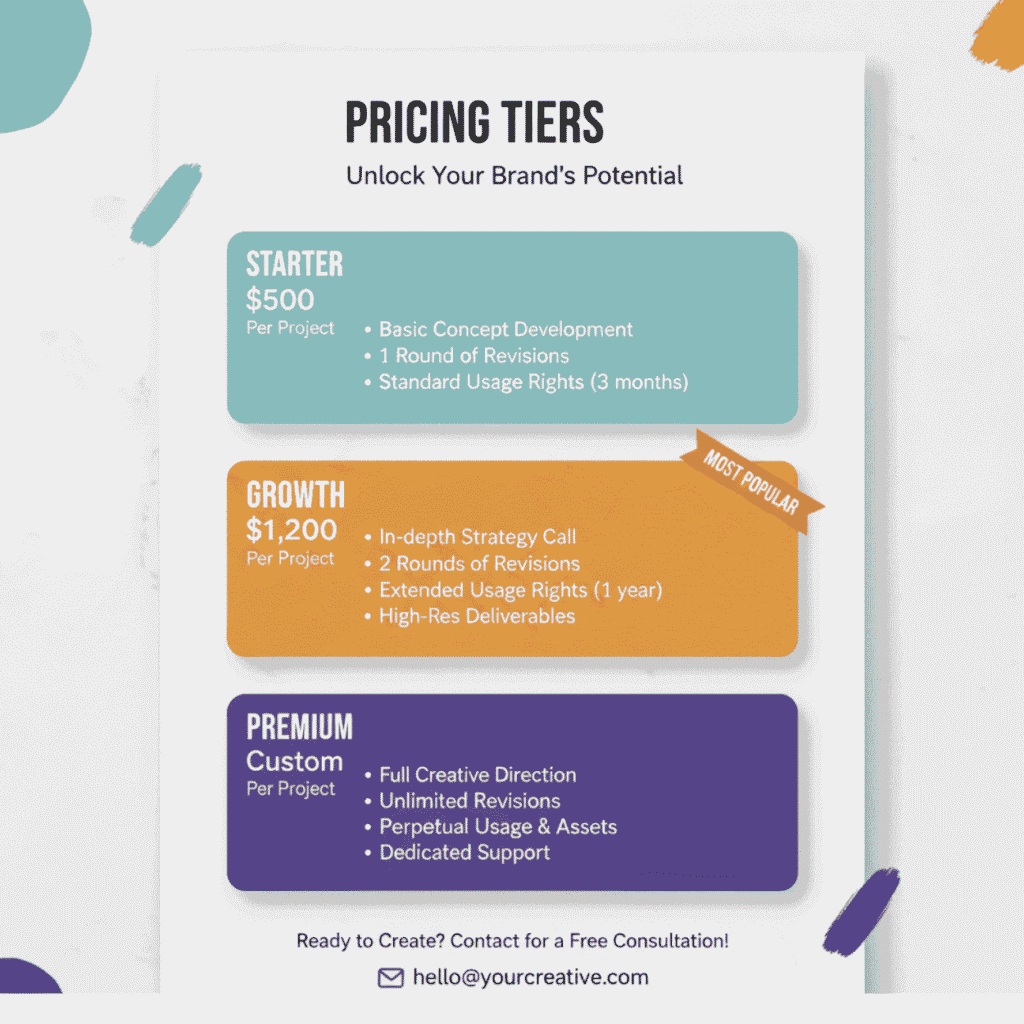
Simple pricing tiers
Tiny Experiments That Reveal What Scales
Treat momentum as a series of experiments:
- 7-day pricing test.
- 30-day content format shift.
- Mini-course pilot.
Document what works, drop what drains, and double down on the sustainable paths.
When you iterate small, you avoid overwhelm while finding what scales.
For experiment design, read Systemise Your Creative Workflow: How to Repurpose and Scale Content Without Burnout.
Metrics That Measure Sustainability
Stop chasing vanity metrics. Track your creative health:
- Energy Score (1–10): Weekly self-rating of energy and motivation.
- Time-to-Ship: Days from idea to publication.
- Repurpose Ratio: Number of micro-assets per major post.
- Revenue per Hour: Actual productivity, not just activity.
These KPIs reveal your sustainable productivity trends far better than follower counts.
Templates That Make Sustainability Repeatable
Templates prevent decision fatigue and promote creative consistency:
- 30-day creator sprint: Priorities, rest, and repurpose checklist.
- Launch micro-checklist: Minimum viable offer, timeline, and buffer days.
- Community pulse: Weekly check-in structure and highlight tracking.
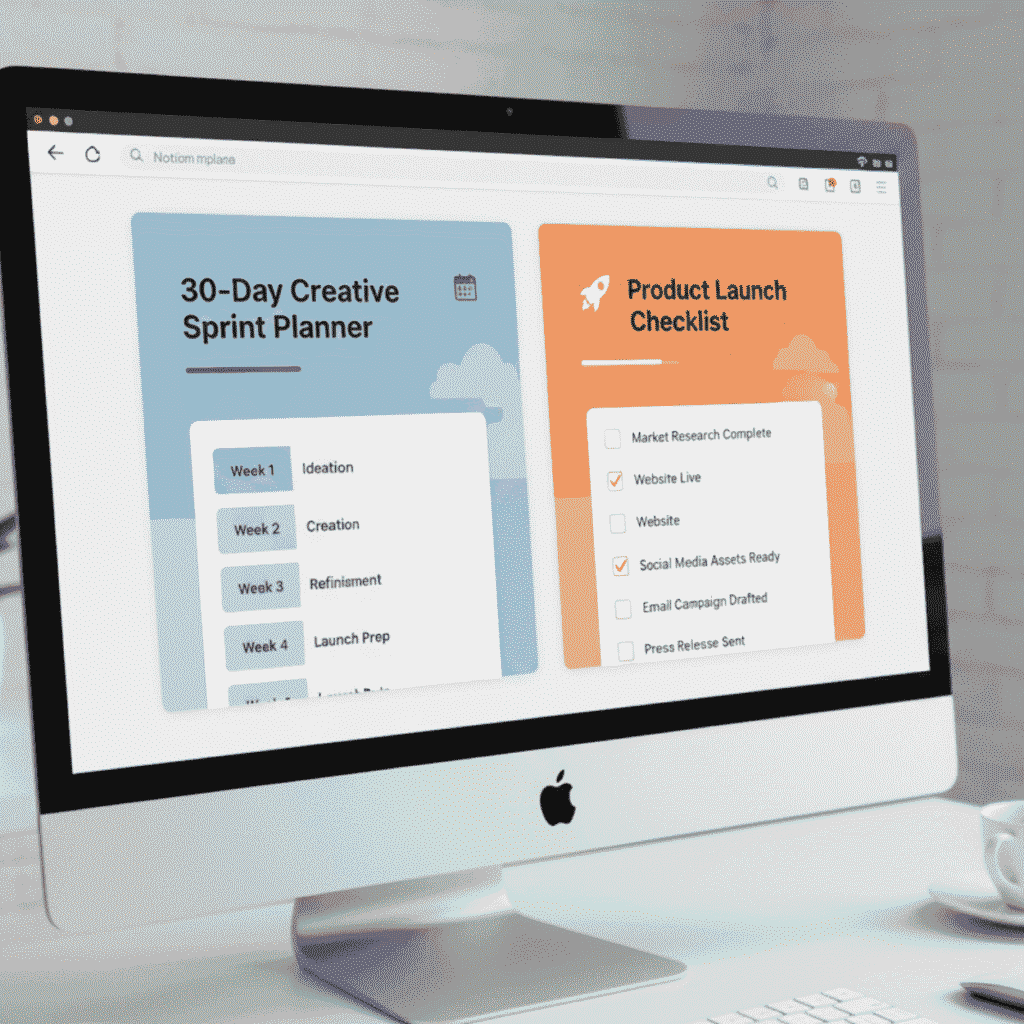
Notion templates showing a 30-day sprint plan
Recovery Plan for Momentum Dips
Even sustainable systems face dips. Here are a few recovery steps:
- Audit the past 30 days, identify overcommitments.
- Recenter on your Small Set.
- Add margin and rest.
- Do a “joy project” to rekindle curiosity.
- Ask your community for support.
These cycles help a sustainable creator bounce back stronger.
Case Study: Maya’s Sustainable Shift
Maya, a freelance designer, was burning out. She rebuilt her system by:
- Choosing two key channels: newsletter + portfolio.
- Building a repurpose workflow from essays to visuals.
- Adding one weekly rest evening.
- Launching a $5/week paid tier, 30% of rent covered in 3 months.
Her momentum now grows without chaos, proof that sustainable productivity beats intensity.
Tool Stack for Creative Sustainability
Keep it lean and functional:
- Planning: Notion, Airtable
- Email: ConvertKit, Substack
- Editing: Descript, CapCut
- Payments: Stripe, Gumroad
For practical scheduling guidance, Hootsuite’s blog covers best practices for timing, consistency, and multi-platform content planning. See their full scheduling guide here.Quarterly audits ensure every tool earns its place.
Rituals That Amplify Momentum
Rituals make sustainability habitual:
- Daily: 10-minute planning + 5-minute reflection.
- Weekly: One deep creation block + community pulse.
- Quarterly: Monetisation sprint + digital detox.
Consistency transforms chaos into rhythm.

Creator writing a 10-minute plan
The 30-Day Plan for Sustainable Creation
Week 1: Define Small Set + create your editorial calendar.
Week 2: Batch content + build a repurpose checklist.
Week 3: Run one small monetisation experiment.
Week 4: Measure energy, remove a redundant tool, schedule rest.
By Day 30, your momentum will feel stable, repeatable, and energising the foundation of a truly sustainable creator system.
Common Traps and Fixes
- Trap: Chasing virality → Fix: Prioritise genuine connection over spikes.
- Trap: “Always-on” engagement → Fix: Tier access and schedule rituals.
- Trap: Complex tech stack → Fix: Keep the “right 3” tools only.
These guardrails ensure long-term creator wellness.
Quick Start Checklist (First 72 Hours)
- Define your Small Set (30 minutes).
- Block two deep creation sessions this week.
- Create a repurpose checklist for your next long-form piece.
- Schedule one rest block (2–4 hours).
Small, immediate steps spark momentum fast.
Build Momentum That Lasts
A sustainable creator doesn’t chase output; they build systems that protect their creative fuel. By clarifying focus, adding margins, nurturing community, and resting intentionally, you create consistency that compounds.
You don’t need to work harder to grow, just smarter, steadier, and with systems that serve you. Sustainable creation isn’t a phase; it’s a lifestyle of long-term, joyful momentum.
Explore how to extend this framework in Scale Without Burnout: Build Smarter Processes and Productivity Systems for Remote Workers: 7 Ways to Streamline Your Workflow. Together, they form your complete system for creative longevity.


