


Imagine a pilot attempting to land a commercial jet in thick fog without a single working instrument in the cockpit. They have no altimeter to gauge height, no radar to detect obstacles, and no fuel gauge to measure endurance. They are flying purely on “feeling.” In the world of aviation, this is a recipe for disaster. In the world of business, it is called “guesswork,” yet thousands of entrepreneurs and leaders fly this way every single day.
Data-driven decisions are what separate thriving, resilient enterprises from those that are stuck in a cycle of reactive firefighting. Many professionals still rely solely on intuition. While gut instincts have their place in creative vision, depending on them for operational growth leads to missed opportunities, wasted resources, and the crippling stress of indecision.
This article breaks down each habit into simple, actionable steps with real-world examples and quick case studies designed for freelancers, startups, and remote teams ready to grow without burning out.
Table of Contents
Why Intuition Isn’t Enough
To understand the power of data-driven decisions, we must first address the “Intuition Trap.” Human beings are naturally susceptible to cognitive biases, such as confirmation bias (looking for info that supports our existing beliefs) and the availability heuristic (overestimating the importance of info we remember easily). In a high-stakes environment, these biases lead to “Decision Fatigue.” This occurs when the sheer volume of choices exhausts your mental energy, causing you to make poorer choices as the day progresses.
By building these six habits, you are not replacing your creativity. You are protecting it. You are creating a “safety net” of facts that allows your intuition to focus on high-level strategy rather than low-level guesswork.
1: Track Key Metrics Consistently
The first step toward data-driven decisions is knowing what to measure and measuring it consistently. Many small business owners collect endless data but fail to interpret what truly matters.
Action Steps
- Instead of tracking fifty metrics, identify three to five Core Key Performance Indicators (KPIs). Examples include:
- Revenue growth rate
- Customer acquisition cost
- Lead-to-client conversion ratio
- Client retention rate
- Employee productivity index
- Revenue growth rate
- Use simple tools like Google Sheets, Airtable, or Notion dashboards to centralise your tracking.
- Create a review schedule:
- Daily for operational data
- Weekly for performance trends
- Monthly for long-term growth
- Daily for operational data
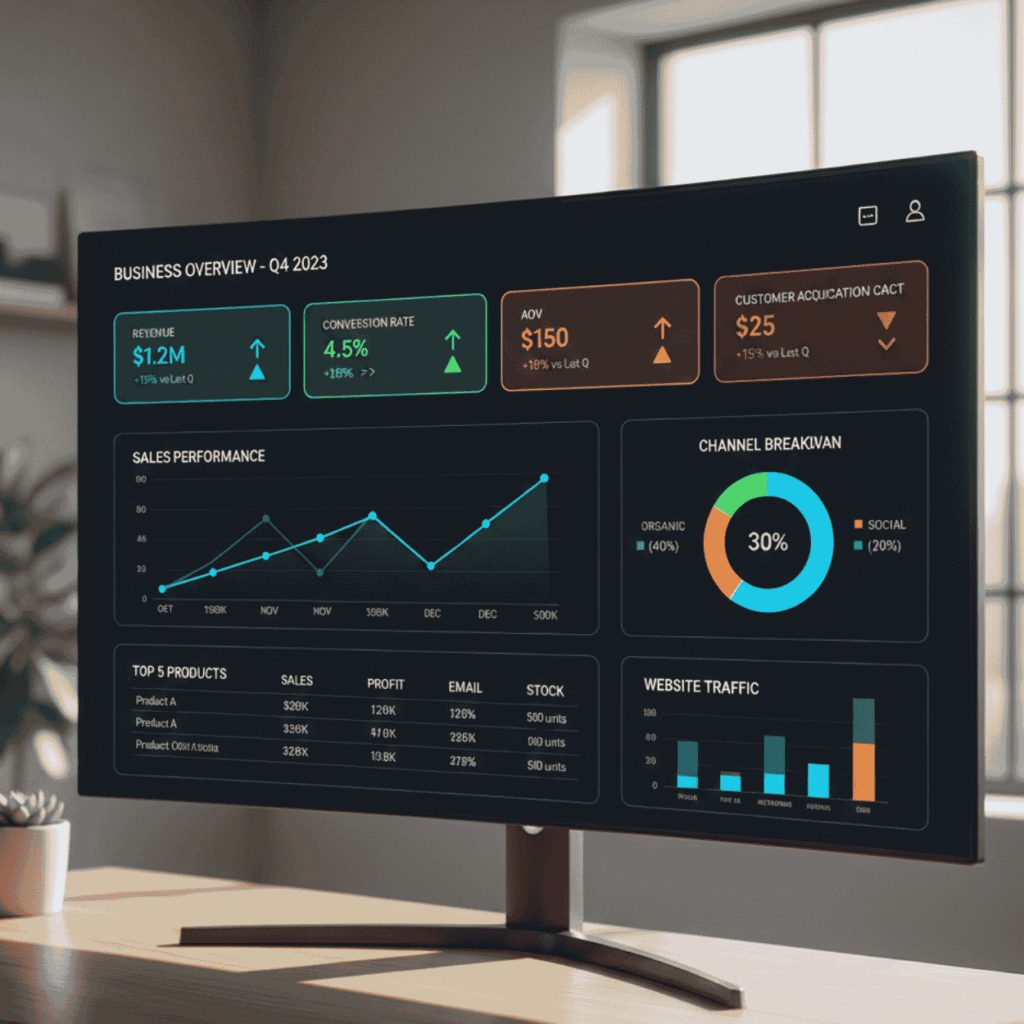
Entrepreneur reviewing KPIs to guide data-driven decisions
Mini Case Study
A freelance marketer tracked time spent on different campaigns versus revenue earned. Within two months, they found 30% of their time went to low-paying clients. By focusing on higher-value projects, revenue rose 25% without increasing workload, a clear result of data-driven decisions.
Explore HubSpot’s guide to business metrics for more insights.
2: Use Data to Prioritise Tasks
Not every task deserves equal attention. When you apply data-driven prioritisation, you discover where your energy produces the biggest impact.
To remove the emotional weight from your to-do list, you must shift from choosing tasks based on how you feel to evaluating them based on their objective return on investment. This is achieved by weighing the potential scale of a project’s audience and its direct impact on your primary goals against the actual time and energy required to complete it. By honestly assessing how certain you are of a successful outcome versus the “cost” of the work involved, you can filter out low-value distractions and focus your energy on the high-leverage actions that move the needle the most.
Action Steps
- Assign a score to each task based on impact vs. effort.
- Automate low-value activities using Zapier, Notion, or Trello automations.
- Review your output weekly to adjust and refine priorities.
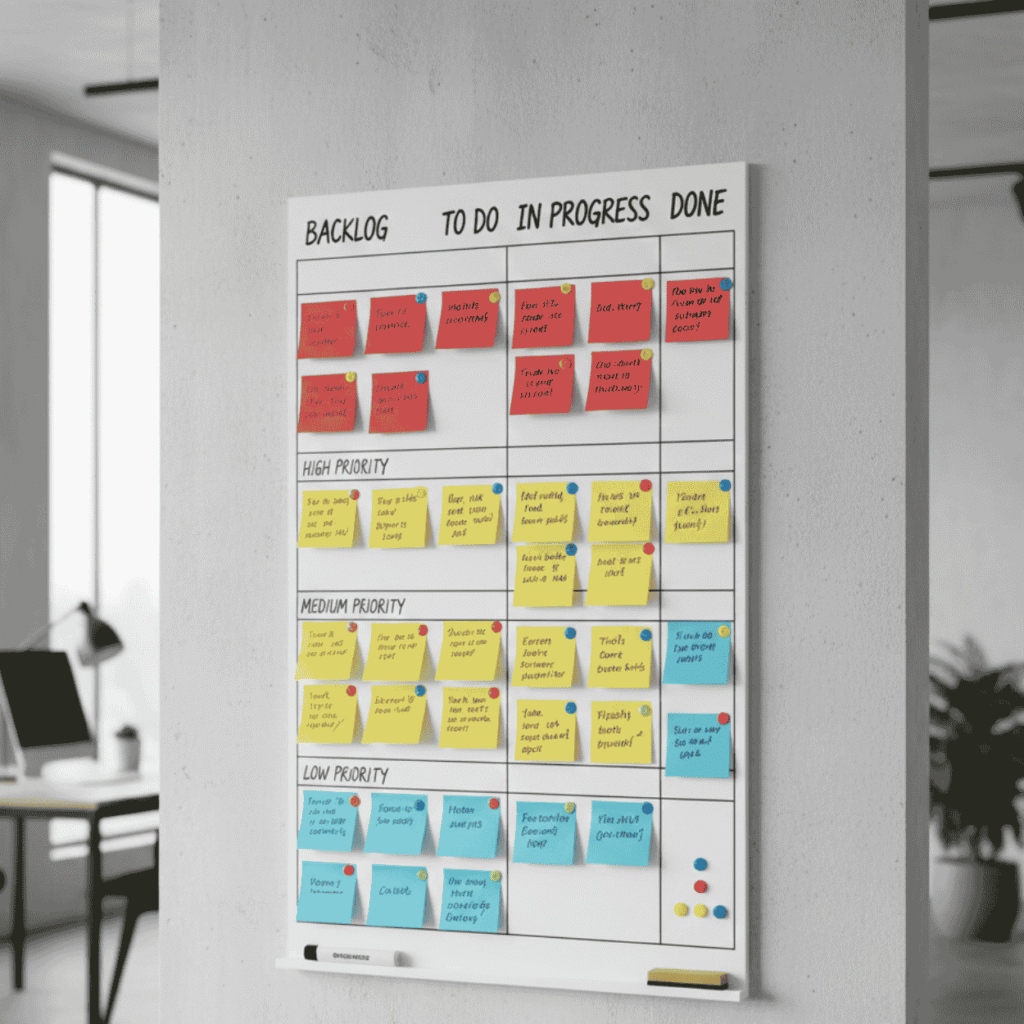
Remote worker using data to prioritise high-impact tasks
Mini Case Study
A solopreneur running an online store realised that email marketing generated 60% more revenue than social media content. By automating social posts and focusing on campaigns, they grew sales by 18% and worked fewer hours.
Combine with Scale Without Burnout: 6 Smart Process Tweaks That Help You Grow and Stay Sane to streamline workflows.
3. Review Results Regularly
Tracking data is pointless if you never use it to learn; true insight only happens when you bridge the gap between gathering information and reflecting on it. To move beyond simply recording their history, high-performers use a “Decision Log” to turn their choices into a personal feedback loop. By recording your reasons, expected outcomes, and even your mood when making a major choice, you create a baseline to revisit six months later. This review process allows you to see exactly why a decision succeeded or failed, helping you sharpen your intuition and make better, more objective choices in the future.
Action Steps
- Weekly reviews: Spend thirty minutes every Friday reviewing your KPIs.
- Monthly analysis: Look for recurring bottlenecks. If you see the same problem appearing three months in a row, it is a system failure, not a fluke.
- Document insights: Keep a “decision log” or “learning journal” for context and accountability.

An entrepreneur analysing weekly
Mini Case Study
A remote development team reviewed sprint outcomes weekly. They realised that unclear requirements caused frequent delays. After revising SOPs and onboarding templates, they cut delays by 40% in three months.
Pair with Automation Made Human: 5 Practical Tools to Simplify Your Workflow and Save Hours to automate your review process.
SHRM’s resources on performance management analytics offer practical frameworks for tracking and interpreting employee performance data.
4. Collect Feedback from Clients and Team
Numbers tell one side of the story; feedback reveals the other. Combining quantitative and qualitative data enhances clarity in decision-making.
Whether you are a solopreneur or leading a team of fifty, you need structured feedback loops. This reduces your “blind spots” and ensures your data-driven decisions are grounded in reality.
Action Steps
- Send monthly surveys to clients or teammates.
- Schedule one-on-one sessions for deeper insights.
- Use anonymous feedback forms to encourage honest responses.

Collecting client and team feedback
Mini Case Study
A design agency introduced anonymous feedback surveys. They discovered unclear briefs were causing excessive revisions. After improving communication systems, project turnaround time improved by 35%.
Connect with Client Communication Systems: 5 Boundaries That Strengthen Relationships and Retain Clients for structured feedback loops.
5. Use Tools to Simplify Analytics
Manual tracking is the enemy of consistency. If it takes you three hours to generate a report, you will eventually stop doing it. Smart analytics tools make your productivity systems efficient and actionable.
Integrate your disparate tools so that data flows seamlessly. For example, your CRM should talk to your accounting software, which should talk to your marketing dashboard. This eliminates manual entry errors and saves hours of administrative “friction.”
Action Steps
- Use Google Analytics to monitor website and content performance.
- Integrate Notion or Airtable for internal project tracking.
- Automate updates using Zapier or Make, so data flows seamlessly.

An entrepreneur using business analytics tools
Mini Case Study
A remote marketing consultant automated weekly email and social media data into a single dashboard. The result? A 6-hour weekly time savings and faster data-driven decisions on campaign scaling.
Combine with Productivity Systems for Remote Workers: 7 Ways to Streamline Your Workflow and Reduce Overwhelm.
Read Zapier’s beginner guide to automation.
6. Make Small, Informed Experiments
The most successful businesses in the world, from Amazon to Netflix, view every decision as a test. They do not “bet the farm” on a hunch. They run small, informed experiments, measure the results, and then scale what works.
Action Steps
- Create a hypothesis: Before launching a new product or changing a process, state your hypothesis: “If we do X, then Y will happen, as measured by Z.” This forces you to define success before you begin. (e.g., “Adding video testimonials will improve conversions”).
- Test small: Try a new marketing headline on a small segment of your list before rolling it out to the entire list.
- Measure results by comparing them against benchmarks and adjusting accordingly.
- Validate Before Scaling: Only invest heavy resources after the data confirms the experiment was a success.
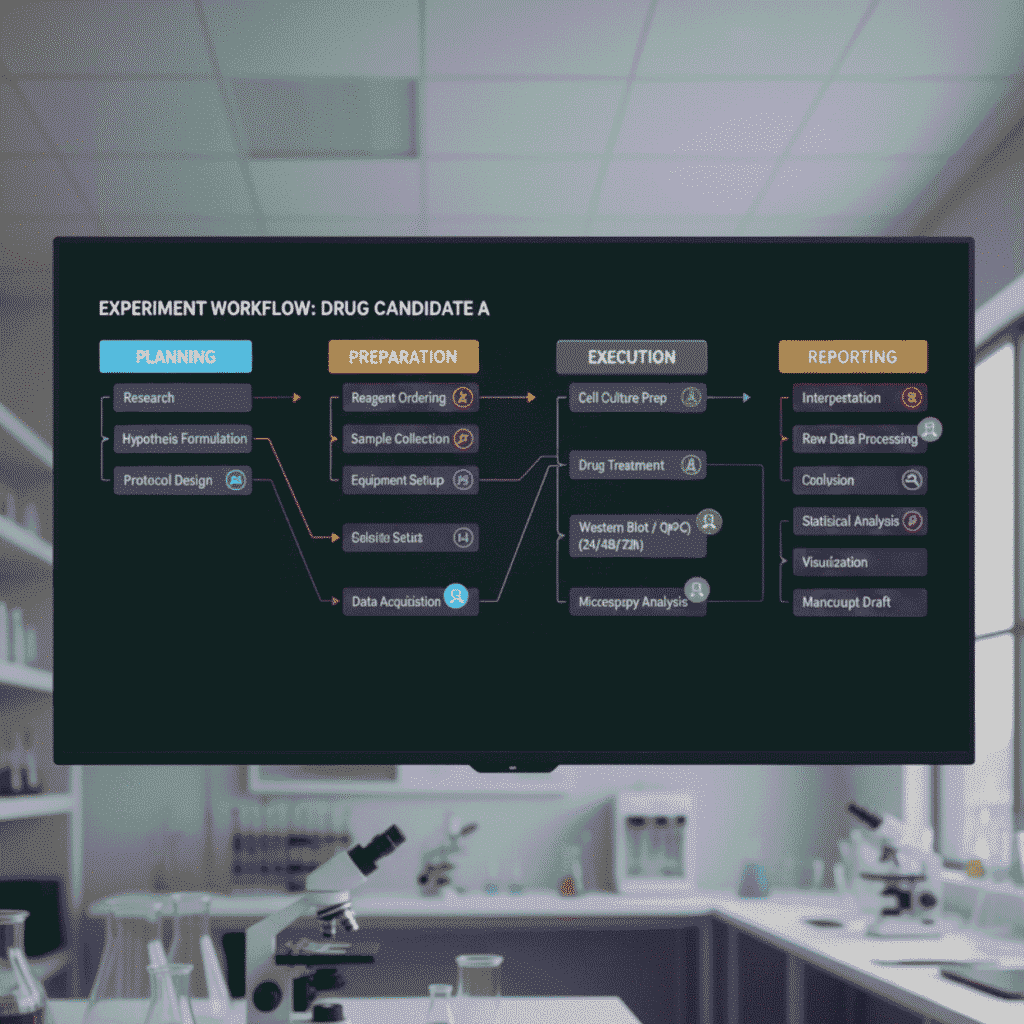
An entrepreneur testing small experiments
Mini Case Study
A content creator tested two landing page versions. One design improved lead generation by 45%. Rolling it out sitewide led to a 30% monthly increase in qualified leads, proof of data-driven experimentation at work.
For a practical framework on business experimentation, Harvard Business Review’s step-by-step guide on running smart business experiments is a solid starting point.
Bringing It All Together
| Habit | Purpose | Key Benefit |
| Track Metrics | Measure what matters | Identify trends & priorities |
| Data-Driven Prioritisation | Focus on high-impact tasks | Increase efficiency |
| Review Results | Learn from outcomes | Improve future decisions |
| Collect Feedback | Include perspectives | Reduce blind spots |
| Use Tools | Automate tracking | Save time & reduce errors |
| Experiment | Test small changes | Encourage innovation & growth |
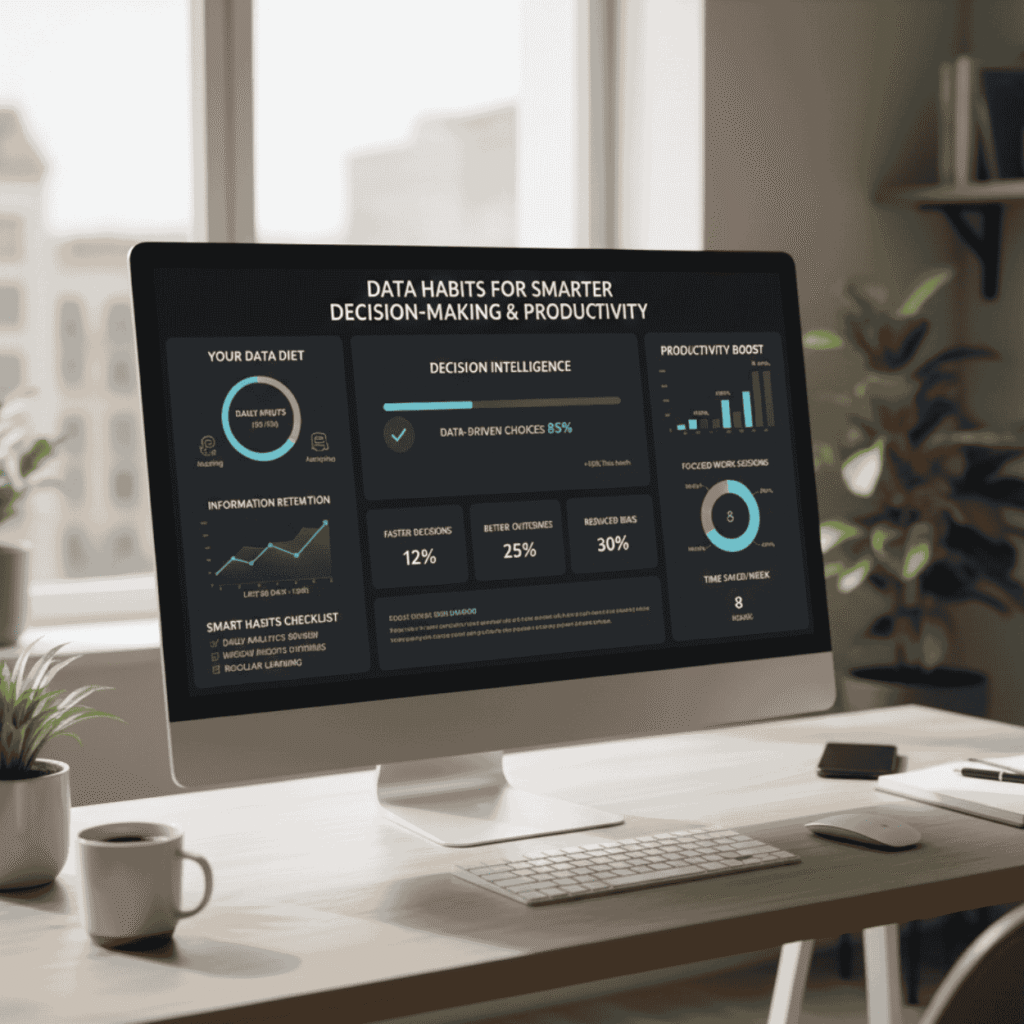
Visual summary of data habits
Practical Tips for Every Audience
For Freelancers:
Use data to measure client value, track time, and improve task selection. Build smarter workflows with automation tools like Notion or ClickUp.
For Startups:
Create a shared analytics dashboard. Align your productivity systems with team-wide OKRs (Objectives and Key Results). Use data-driven decisions to set goals and allocate budgets effectively.
For Remote Teams:
Automate report generation, run structured review meetings, and foster transparency. Use both numbers and feedback to maintain clarity in decision-making.
By integrating these practices, every professional, solo or collaborative, can simplify work and amplify outcomes.
FAQs
Can I be “too” data-driven?
Yes. This is known as “Analysis Paralysis.” Data should inform your decisions, not delay them. If you have 70% of the information you need, it is often time to act.
What if my business is too small for big data?
Data-driven decisions are even more important for small businesses because you have less room for error. Even tracking one metric, like “Cost per Lead,” can be the difference between profit and loss.
Which tools are best for remote teams?
We recommend a combination of Notion for documentation, Airtable for data structure, and Zapier for connectivity. These tools are flexible enough to grow with your organisation.
How do I encourage my team to use data?
Lead by example. In meetings, always ask: “What does the data say?” Once the team sees that data-backed ideas are rewarded, they will naturally adopt the habit.
Reclaiming Your Strategic Certainty
Smart growth doesn’t come from working harder; it comes from working with data. The six data habits outlined here empower you to:
- Make data-driven decisions with confidence
- Build smarter workflows that eliminate waste.
- Strengthen your decision-making habits through consistent reflection.n
- Design productivity systems that scale sustainably
Start small, pick one habit, implement it this week, and track progress. Over time, these systems become second nature. You’ll move from reacting to predicting, from guessing to growing.
When clarity replaces confusion, growth follows naturally.