


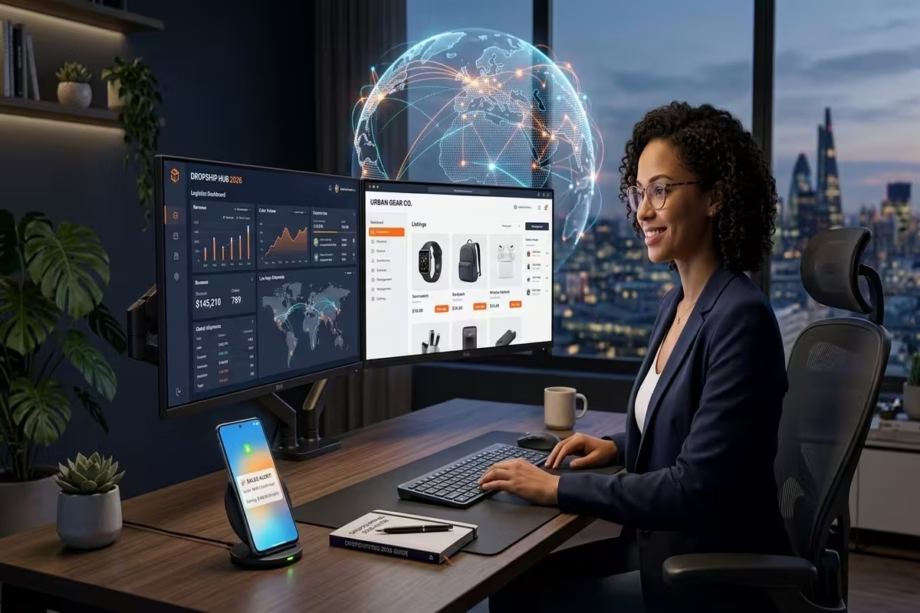
What if you could build a global retail business from your laptop, without ever touching a single product? No warehouse lease. No upfront stock purchase. No packing tape. Just you, a smart strategy, and a market worth hundreds of billions of dollars waiting for focused entrepreneurs to claim their slice.
That is not a fantasy. That is the promise of dropshipping in 2026, and the numbers back it up completely.
The global dropshipping market was valued at USD 365.67 billion in 2024 and is projected to reach USD 1.25 trillion by 2030, growing at a compound annual rate of 22% (Grand View Research, 2025). Right now, 23% of all online sales globally come from dropshipped products, and over 27% of ecommerce businesses worldwide use dropshipping as their primary fulfilment method (SellersCommerce, 2025). The opportunity is real; it is growing, and it is open to anyone willing to do the work properly.
But here is the part that separates this guide from the noise: dropshipping is misunderstood. Millions of people have tried it casually and failed. Only 10% of dropshipping businesses turn a profit in their first year. Not because the model is broken, but because most people treat it as a shortcut rather than a serious business system.
This guide gives you the full picture. From picking a profitable niche and vetting reliable suppliers to building your store, driving traffic, and scaling intelligently, every step is covered in depth. Whether you are starting from zero or trying to fix a store that is not working, this is the guide you keep open.
Table of Contents
Disclosure: Our content is engineered to help you make informed, data-driven, and smart decisions. Digital Solutions Edge is reader-supported; when you engage with our recommendations or click certain links, we may receive a commission. This support allows us to continue delivering the digital solutions you rely on. Thank you for being part of our community.
What Dropshipping Actually Is (and What It Is Not)
Dropshipping is a retail fulfilment model where you sell products through your own online store without holding any inventory. When a customer places an order, you forward that order to a third-party supplier or manufacturer, who then ships the product directly to the customer on your behalf. You never see the physical product. Your job is to attract the customer, make the sale, and manage the relationship.
The business model runs on a simple margin: you sell at retail price and pay wholesale price to the supplier. The difference is your profit, minus your marketing and operational costs.
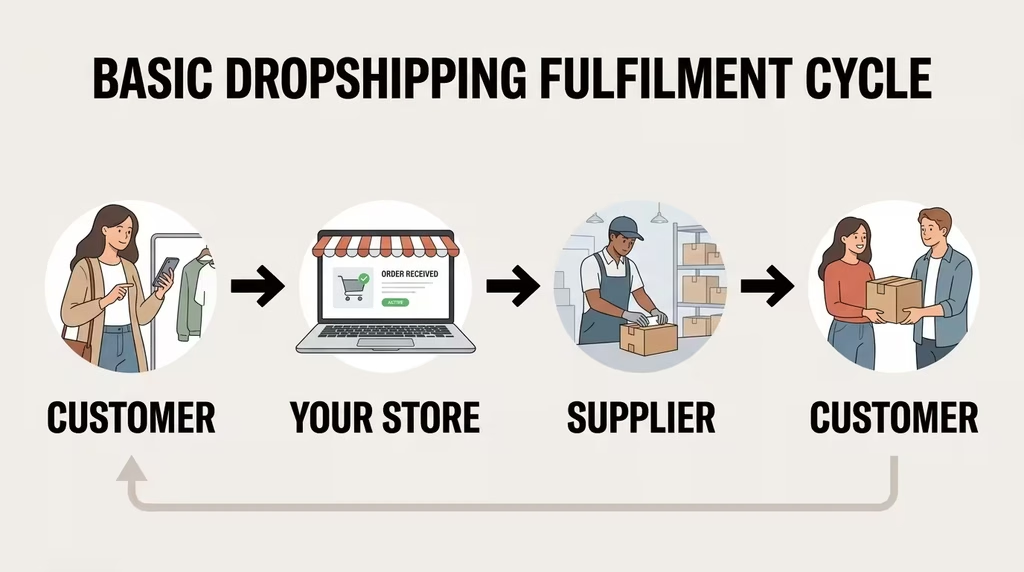
What dropshipping is NOT is worth clarifying early. It is not passive income with no effort. It is not a system that runs itself from day one. It is not guaranteed profit just because the startup cost is low. The low barrier to entry cuts both ways: it lets you start easily, and it lets your competition start easily too. Success in 2026 belongs to the dropshippers who treat this as a real brand-building business, not a product listing exercise.
There are three primary types of dropshipping operations:
- Product reselling: You source existing products from suppliers (AliExpress, CJ Dropshipping, Spocket, etc.) and sell them at a markup.
- Print-on-demand (POD): A supplier prints your designs on products like t-shirts, mugs, and phone cases and ships them individually. Printful and Printify are the most popular platforms.
- Private label dropshipping: You source products, have them branded with your label, and the supplier ships them. This is the most advanced model with the highest margin potential.
Most beginners start with product reselling because it requires the least upfront investment and provides the fastest path to testing what works.
Dropshipping vs Traditional Ecommerce: The Real Differences
Before you commit to the dropshipping model, you need to understand where it fits relative to other ecommerce approaches. The comparison is not about which model is better universally; it is about which model fits your current capital, risk tolerance, and goals.
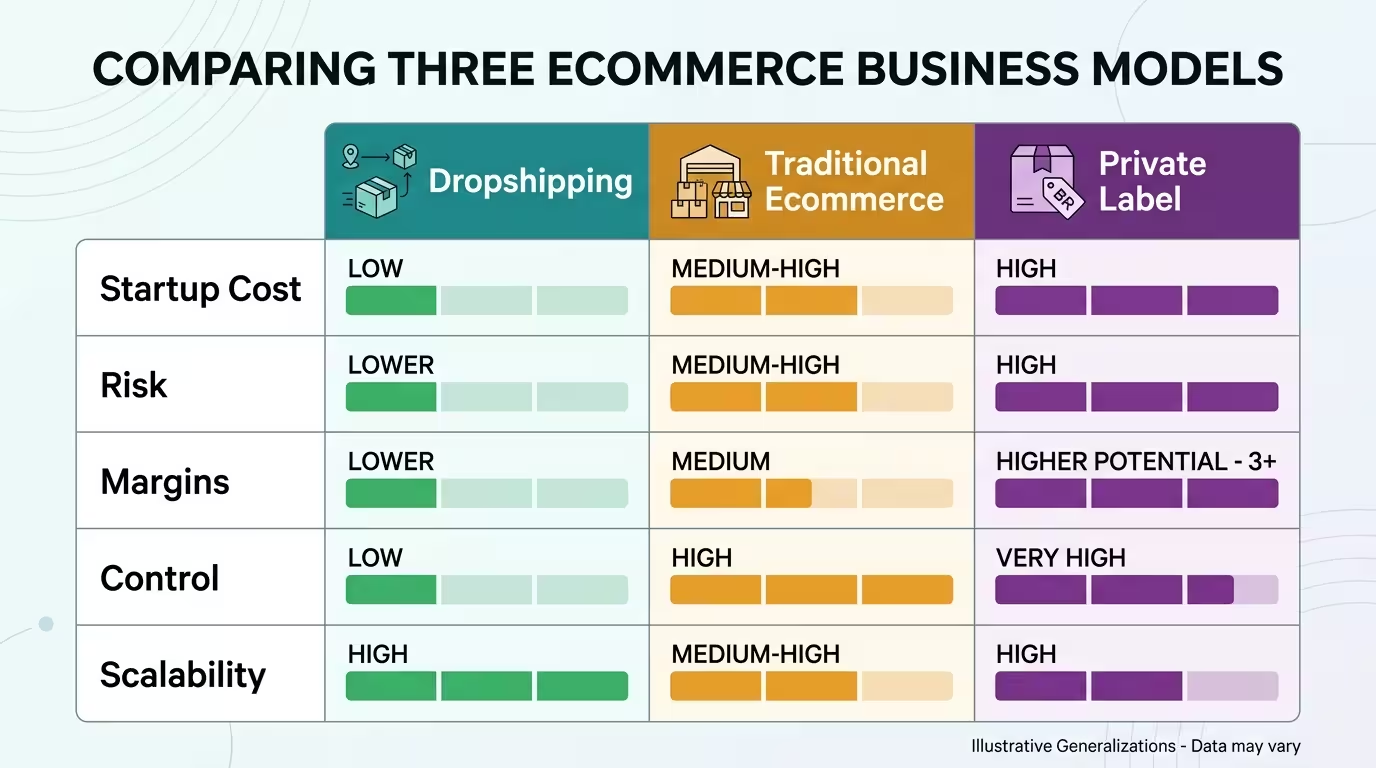
Dropshipping requires minimal upfront capital because you are not buying stock. You pay your supplier only after a customer pays you. Your risk is low, your margin is lower (typically 15–30%), and your control over product quality and shipping speed is limited. Your competitive advantage comes from marketing, brand positioning, and niche focus.
Traditional e-commerce (buying wholesale) means you purchase inventory in bulk, warehouse it, and fulfil orders yourself. Margins are stronger (often 40–60%); you control quality and shipping, but you carry the financial risk of unsold stock. This model suits businesses with capital and an established customer base.
Private label/brand building sits at the top of the e-commerce value chain. You commission products made to your specification, branded under your name. It demands the most capital and time but produces the strongest margins, brand equity, and long-term exit value.
For a new entrepreneur in 2026 without significant capital, dropshipping is the most logical starting point. It lets you test markets, find winning products, and build a customer base before committing to larger inventory investments. The strategic path many successful ecommerce operators follow is: start with dropshipping, validate a niche, then move select winning products into private label or wholesale as revenue grows.
Is Dropshipping Still Worth Starting in 2026?
Yes, with a clear-eyed understanding of the landscape.
The dropshipping market is growing at over 22% annually and is on a trajectory toward USD 1.25 trillion by 2030 (Grand View Research, 2025). Social commerce, particularly through TikTok Shop, Instagram Shopping, and Pinterest, is creating new entry points for niche stores that can produce compelling visual content. AI-powered product research tools, automated order processing, and smarter supplier platforms have lowered the operational burden dramatically compared to five years ago.
That said, the game has changed. The early 2010s model of listing cheap products with 30-day shipping from China no longer works. Consumer expectations have been permanently reshaped by Amazon-level fulfilment. Today’s online buyer expects tracking updates, delivery within 7–10 days at most, and reliable customer support. Stores that still operate on 15–20-day timelines see dramatically higher cart abandonment, dispute rates, and negative reviews.
The dropshippers winning in 2026 are doing four things differently from those who fail:
- They chose a specific niche rather than a general store approach. The era of “sell anything to everyone” is functionally over. Focused niche stores build loyalty and command better prices.
- They invested in brand aesthetics and trust signals early. Professional store design, clear policies, and social proof are baseline expectations now.
- They sourced from reliable, faster suppliers, including US and EU-based warehouses where possible. Stores working with US-based suppliers report up to 35% faster shipping and 20% more repeat customers (ZIK Analytics, 2026).
- They automate repeatable tasks. Studies show 75% of stores using automation across multiple operations see measurably higher profits (ZIK Analytics, 2026).
Dropshipping in 2026 rewards the prepared, the strategic, and the brand-conscious. That is who this guide is for.
Step 1: Choose a Profitable Niche
Your niche decision is the single highest-leverage choice you will make in your dropshipping journey. Get it right and everything downstream becomes easier. Get it wrong, and you will be swimming upstream on every product, every ad, and every customer conversation.
A profitable niche in 2026 has four characteristics:
- Passionate, identifiable buyers who gather in communities, follow influencers, and search actively for products in that category.
- Evergreen or growing demand as confirmed by search trend data, not just a viral spike that will vanish in six weeks.
- A clear pain point or desire the products address. Problem-solving products and desire-fulfilment products both convert well; “nice to have” products with no clear emotional driver do not.
- Pricing that supports 30% or better margins after supplier cost, platform fees, and ad spend.
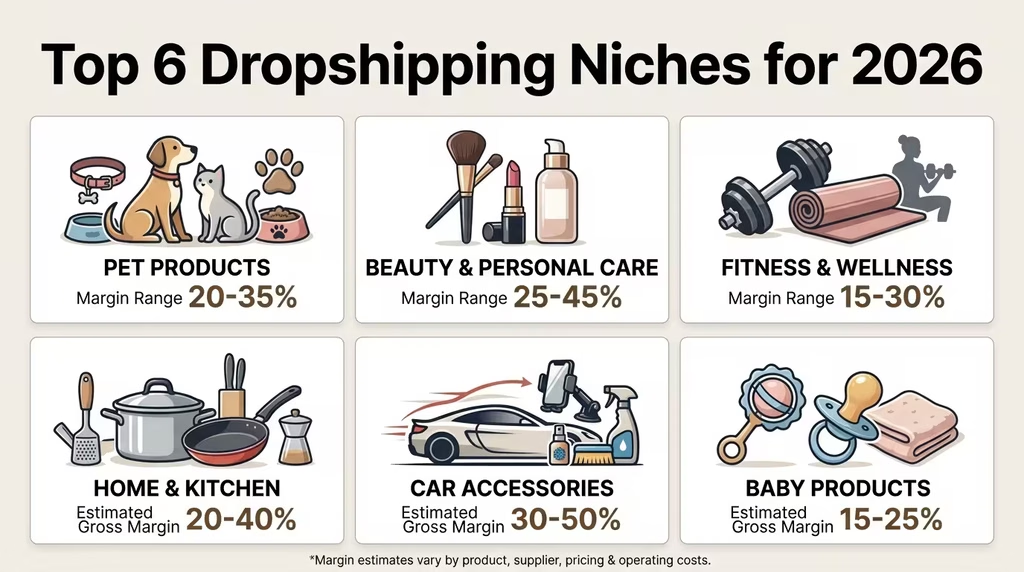
The Top-Performing Niches for 2026
The following categories are producing strong results based on current market data and sales performance:
1. Smart Home and AI-Powered Gadgets: Smart home devices, AI-enhanced fitness trackers, voice-controlled accessories, and home automation tools are selling at high average order values of USD 50–200+. The global smart home market is expanding rapidly, and product innovation creates constant catalogue refresh opportunities.
2. Pet Accessories and Wellness: Pet owners treat their animals like family, and spending reflects that. The global pet accessories segment is valued at USD 26.8 billion, growing at 6.8% CAGR (American Pet Products Association, as cited by Yakkyofy). The niche has low return rates, strong emotional purchase drivers, and excellent repeat purchase frequency.
3. Eco-Friendly and Sustainable Products: Green commerce has crossed from trend to expectation. Consumers in 2026 actively seek and pay premiums for products that reduce waste, use biodegradable materials, or have traceable supply chains. Eco-friendly home goods, sustainable fashion, and reusable everyday items consistently outperform generic alternatives.
4. Health, Wellness, and Personal Care: The wellness industry shows consistently high and growing consumer interest. Portable health devices, ergonomic tools, sleep aids, and supplements (where legally dropshippable) all sit in a category where buyers research, trust reviews, and convert at higher rates.
5. Home Office and Remote Work Equipment: Remote and hybrid work has permanently reshaped how people spend on their environments. Cable management, ergonomic desk accessories, monitor stands, and productivity organisers serve a massive audience that refreshes their workspace regularly. AOV in this niche is strong.
6. Fashion: Athleisure, Accessories, and Niche Apparel: Fashion remains the largest dropshipping segment, accounting for over 34% of the market in 2024 (Grand View Research, 2025). The key in 2026 is specificity: senior women’s activewear, minimalist jewellery for professionals, streetwear for specific subcultures. Generic fashion loses; niche fashion wins.
The Sub-Niche Stacking Strategy
One of the most effective approaches emerging in 2026 is sub-niche stacking. Rather than building a “pet accessories store,” you build a store for senior dog wellness. Once you own that micro-market, you expand into adjacent sub-niches that serve the same customer. This gives you the conversion advantage of hyper-specificity with the revenue ceiling of a broader catalogue. Stores using this approach consistently outperform generic stores in conversion rate and customer lifetime value.
How to Validate Your Niche Before Committing
Do not commit to a niche based on gut feeling alone. Run it through this four-point validation framework:
- Google Trends: Check the five-year trend for your primary keyword. Is interest stable or rising? Avoid declining categories.
- Amazon and AliExpress: Search for similar products. High review counts confirm real demand. Saturation from major brands is a red flag.
- TikTok Creative Centre: Search your niche to find trending product videos. Engagement metrics reveal real consumer interest in real time.
- Profit margin check: Find supplier pricing on AliExpress or Spocket and compare to competitor retail prices. If you cannot hit 30% margins after ad spend and fees, the niche economics are not viable.
Step 2: Research and Validate Your Products
Niche selection and product selection are related but distinct decisions. Your niche defines your market; your products define your catalogue. Both need data-driven validation before you invest time and ad budget.
The 5 Criteria for a Winning Dropship Product in 2026
1. Solves a specific problem or satisfies a strong desire: Products that make life easier, save time, or address a visible frustration are natural converters. Impulse-buy products must trigger an emotional response within seconds of being seen.
2. Price point of USD 20–150: Products below USD 20 struggle to absorb marketing costs profitably. Products above USD 200 require more trust-building and a longer sales cycle, which is challenging for new stores without social proof. The sweet spot for beginners is USD 25–80.
3. Lightweight and easy to ship: Heavy, fragile, or oversized items generate disproportionate shipping complaints and return costs. Your first 10–20 products should be easy to fulfil without complexity.
4. Not available easily on Amazon at a dramatically lower price: If your product is sold on Amazon Prime at half your asking price, conversions will be severely limited. Seek products where your positioning, presentation, or bundling creates differentiation.
5. Strong visual appeal for social media advertising: In an environment dominated by paid social, products that can be demonstrated in a short video, generate “wow” reactions, or photograph beautifully have a structural marketing advantage.
Tools for Product Research
Several platforms have been built specifically to identify winning products before they saturate the market:
- Minea: Analyses Facebook, TikTok, and Pinterest ads to surface products that are already generating sales for other dropshippers.
- SellTheTrend: Uses market data to identify trending products across AliExpress, Amazon, and Shopify stores.
- Google Trends: Free and indispensable for understanding search demand over time and spotting seasonal peaks.
- TikTok Creative Centre and Hashtag Research: Organic product discovery through viral content is one of the most powerful (and free) research methods available.
- Amazon Best Sellers and Movers & Shakers: Tell you what people are actively buying and what is growing fast.
Once you identify candidate products, test them cheaply before scaling. Run a small ad spend of USD 30–50 per product to assess click-through rate and conversion. Products that do not perform at small scale rarely perform at scale.
Step 3: Find and Vet Reliable Suppliers
Supplier selection is where most dropshipping businesses are won or lost. An astounding 84% of dropshippers cite finding reliable suppliers as their single biggest challenge (ZIK Analytics, 2026). A bad supplier costs you orders, customers, reviews, and ultimately your business. A great supplier becomes your most important operational partner.
The Key Supplier Platforms in 2026
AliExpress / DSers: Still the most widely used platform for beginner dropshippers. The product range is enormous, and DSers (the official AliExpress dropshipping tool) integrates directly with Shopify for automated order processing. Shipping times are the main weakness; use suppliers with AliExpress Standard Shipping or ePacket to keep times manageable, and look for suppliers with warehouses in the US or EU.
Spocket Specialises in US and EU-based suppliers, which dramatically improves shipping times to North American and European customers. Vetted supplier network, quality-controlled products, and branded invoicing support make it popular with stores focused on customer experience. Shopify and WooCommerce integration is seamless.
CJ Dropshipping: A powerful all-in-one platform that combines sourcing, storage, and fulfilment. CJ offers a free product-sourcing service, custom packaging, and US/EU warehouse options. Strong for sellers wanting to move beyond basic AliExpress sourcing without committing to full private label.
SaleHoo: A vetted supplier directory with over 8,000 verified suppliers. Particularly strong for high-ticket dropshipping and niche products. It includes a Market Research Lab that shows sell-through rates to help validate product choices before committing.
Printful and Printify: For print-on-demand products, these are the gold standard. Both offer global fulfilment networks, custom branding options, and direct integration with Shopify, Etsy, WooCommerce, and TikTok Shop. Printful is generally higher quality; Printify offers more competitive pricing through its supplier network.
Zendrop: This is built specifically for speed and reliability in North American markets. Pre-approved suppliers, fast fulfilment from US warehouses, and automated order processing make it a strong choice for stores prioritising customer experience above catalogue size.
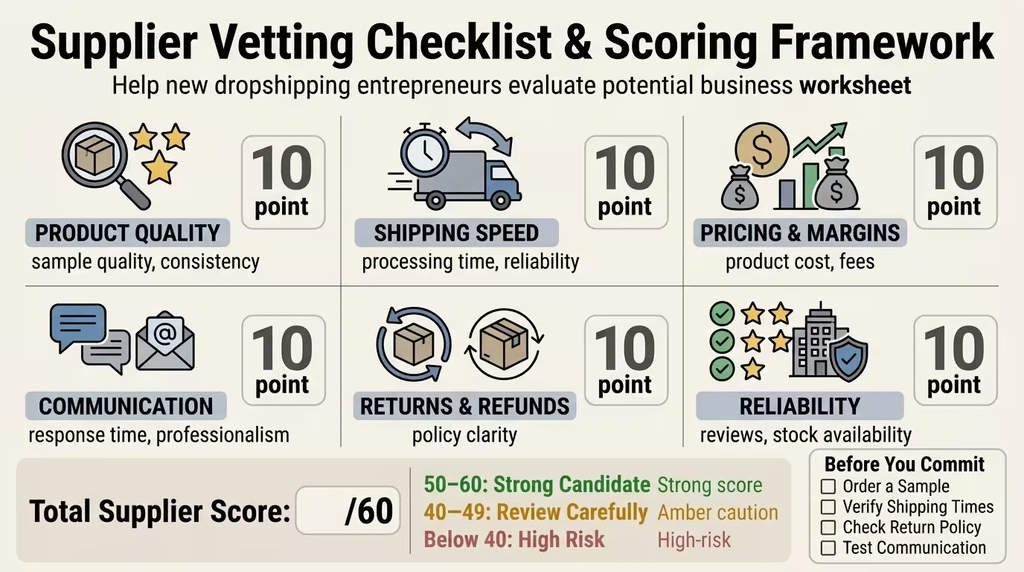
How to Vet a Supplier Before You Commit
Before routing real customer orders through a supplier, complete this checklist:
- Order samples yourself. Assess packaging quality, actual product quality vs the photos, and realistic shipping time.
- Test their communication. Send a message with a question. How fast do they respond? How thorough is the answer? Slow or vague communication will become a customer service disaster at scale.
- Check their reviews and dispute rate. On AliExpress, look for suppliers with a score of 95% or above. Read negative reviews specifically to understand what goes wrong.
- Verify their return policy. Understand how they handle defective items, wrong shipments, and refund requests before a customer asks you.
- Assess their stock stability. Has the product been consistently in stock, or does it frequently go out of stock? Check the listing history.
Step 4: Choose Your Ecommerce Platform
Your e-commerce platform is the foundation of your store. It determines your design flexibility, app ecosystem, payment options, SEO capability, and operational workflows. Choosing the wrong platform early can mean a costly rebuild once you start growing.
The Leading Platforms for Dropshipping in 2026
Shopify: The dominant choice for dropshipping businesses worldwide. Shopify powers 25% of the top one million e-commerce websites globally (Market.us, 2026). Its app ecosystem is unmatched, with direct integrations for DSers, Spocket, CJ Dropshipping, Zendrop, AutoDS, and hundreds of other dropshipping tools. Setup is fast, the interface is beginner-friendly, and the infrastructure scales well. Plans start at USD 39/month (Basic), making it accessible for new stores.
WooCommerce: The right choice if you are comfortable with WordPress and want maximum design control with lower ongoing costs. WooCommerce is free as a plugin; you pay for hosting (from as low as USD 5–15/month) and premium extensions. The learning curve is steeper than Shopify, but the flexibility and SEO power are excellent for content-driven stores.
BigCommerce Strong for sellers who plan to sell across multiple channels simultaneously. Native integrations with Amazon, eBay, Facebook, Instagram, and TikTok Shop make multi-channel management more manageable. Better for intermediate to advanced operators.
Wix eCommerce: A genuinely competitive option for smaller stores in 2026. Wix has invested heavily in its e-commerce features and offers built-in dropshipping integrations. Easier to use than Shopify for total beginners, but the app ecosystem is more limited.
TikTok Shop is worth serious consideration as a channel rather than a standalone platform. TikTok Shop allows you to sell directly through TikTok videos, livestreams, and a product showcase tab. For products with strong visual and entertainment appeal, TikTok Shop can drive extraordinary volume with a fraction of the ad cost of traditional platforms.
Platform Recommendation by Business Stage
| Stage | Recommended Platform | Monthly Cost Estimate |
|---|---|---|
| Beginner (0–3 months) | Shopify Basic | USD 39 |
| Growing (3–12 months) | Shopify (Shopify plan) | USD 105 |
| Multi-channel | BigCommerce or Shopify + apps | USD 79–299 |
| Content-led SEO store | WooCommerce | USD 15–50 (hosting) |
| Social-first brand | TikTok Shop + Shopify | Variable |
Step 5: Build and Launch Your Online Store
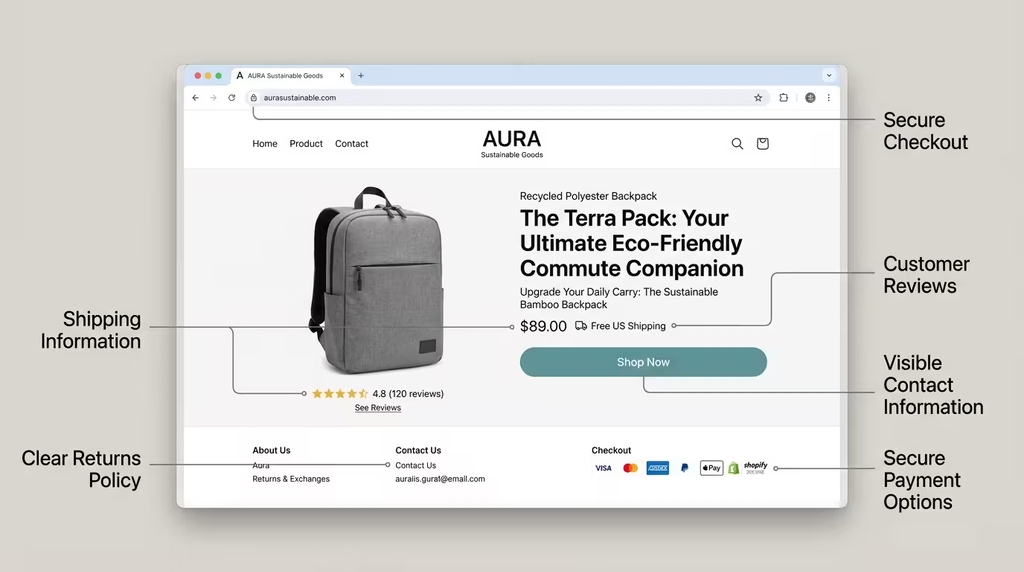
Store design is where trust is built or broken within the first three seconds of a visitor’s arrival. In 2026, consumers have been trained by years of professional e-commerce experiences. A low-effort store communicates low-effort products.
The Core Pages Every Dropshipping Store Needs
Homepage: Clear value proposition in the hero section. Immediately communicate what you sell, who it is for, and why your store is the right choice. Feature bestsellers, trust badges, and social proof prominently. No clutter.
Product Pages: This is where conversions happen. Every product page must include:
- High-quality images from multiple angles (plus video where possible)
- A benefit-led product description, not a specification list
- Clear pricing, shipping time estimate, and return policy
- Customer reviews (import from suppliers or gather from early orders)
- A single, prominent call-to-action button
About Page: Buyers want to know who they are purchasing from. A genuine, human about page that communicates your mission and story converts better than a generic one. Even as a dropshipper, you have a brand story worth telling.
Shipping and Returns Policy: The absence of a clear policy kills conversions. Shoppers check this before buying, especially from stores they do not yet know. Be transparent about realistic delivery windows. A clear, fair returns policy signals confidence in your products.
Contact and FAQ Pages: Reduce support burden and increase trust simultaneously. Anticipate the 10 most common customer questions and answer them clearly.
Essential Store Optimisation Before Launch
Before your first paid traffic campaign, complete this pre-launch checklist:
 Domain name purchased and connected (branded, memorable, .com preferred)
- SSL certificate active (HTTPS)
- All product pages have descriptions, multiple images, and prices
- Shipping policy, returns policy, and privacy policy pages published
- All test orders placed and fulfilment flow verified
- Mobile responsiveness tested on at least two devices
- Page load speed checked (target under 3 seconds on mobile)
- Google Analytics and Meta Pixel installed
- Trust badges visible on the homepage and checkout
Step 6: Set Up Payments and Legal Foundations
A beautiful store that cannot take payments or operates in legal grey areas is a liability, not an asset. Getting your payment processing and legal foundations right from day one protects your business, your customers, and your income.
Payment Processing
Shopify Payments: If you are on Shopify and operating in a supported country, Shopify Payments is the simplest option. There are no transaction fees beyond standard card processing rates, and it supports major cards, Apple Pay, and Google Pay natively.
PayPal: A global standard with high consumer trust. Essential to offer as an option, particularly for international buyers. Note that PayPal has specific policies around dropshipping and may hold funds for new accounts. Build a good dispute record and transaction history to unlock faster payouts.
Stripe: Excellent for technical users who want more control over their payment flows. Stripe supports over 135 currencies and 40+ countries, making it strong for stores targeting diverse international markets.
2Checkout / Payoneer: Important alternatives for sellers in markets where Stripe and PayPal coverage is limited. If you are based in Africa or other emerging markets and selling internationally, these options provide workable solutions alongside local payment aggregators.
Legal Foundations
Dropshipping is a legitimate business model, but operating it without proper legal structure exposes you to personal liability and operational disruption.
Business Registration: Register your business in your home country before generating meaningful revenue. The structure (sole trader, limited liability company, etc.) varies by jurisdiction, but formalising your business protects you personally and allows you to open business bank accounts and access payment processors.
Tax Obligations: Understand your VAT or sales tax obligations in your home market and in markets you sell to. The EU’s Import One-Stop Shop (IOSS) system applies to goods shipped into the EU valued under EUR 150. Ignoring tax compliance at scale creates a liability that can destroy an otherwise healthy business. Consult a local accountant with e-commerce experience.
Trademark and Intellectual Property: Never sell products that bear trademarked logos or brand names without authorisation. Counterfeit product listings are not just an ethical failure; they result in account terminations, legal action, and permanent platform bans.
Supplier Agreements: For any supplier you use consistently, understand their refund policy, stock availability commitments, and how disputes are handled in writing. This protects your customers and your margins.
Step 7: Build a Brand People Trust
Here is the most underestimated truth in dropshipping: your products are not your competitive advantage. Any competent operator can source the same products from the same suppliers. Your brand is your competitive advantage. It is the only thing competitors cannot replicate.
Brand building in dropshipping goes beyond a logo. It encompasses the entire customer experience: how your store looks, how your emails read, how your social media presence communicates, how your packaging feels, and how your support team responds.
The Key Brand-Building Elements
Visual Identity: Consistent colour palette, typography, and imagery style across your store, social channels, and packaging. Professional branding does not require an expensive agency. Tools like Canva, Looka, and Adobe Express let you create strong brand assets affordably.
Brand Voice: Define how your brand communicates. Is it warm and encouraging? Expert and authoritative? Playful and irreverent? Every piece of copy your customers see, from product descriptions to order confirmation emails, should sound consistent.
Custom Packaging: Once your order volume justifies it (typically 50+ orders per month), invest in branded packaging inserts. A thank-you card, branded tissue paper, or a small freebie creates a disproportionate impact on reviews, repeat purchases, and word-of-mouth. Suppliers like CJ Dropshipping and Zendrop support custom packaging.
Social Proof: Reviews, user-generated content, and testimonials are the most powerful trust signals available to a new ecommerce store. Actively request reviews from satisfied customers. Import supplier reviews using apps like Loox or Judge.me to populate product pages before you have direct customer reviews.
73% of top-performing dropshippers emphasise branding and customer experience as their primary differentiation strategy (Thunderbit, 2026). This is not a soft goal; it is the operational priority that determines whether your store becomes a sustainable business or a temporary spike.
Step 8: Drive Traffic With Smart Marketing
Your store will not find customers; you must bring customers to your store. Traffic generation is the lifeblood of every ecommerce business, and in 2026, there are more channels available than ever, each with its own logic, cost structure, and ideal use case.
The most important principle: do not try to be everywhere at once. Start with one or two channels, master them, and expand from there.
Paid Social Advertising
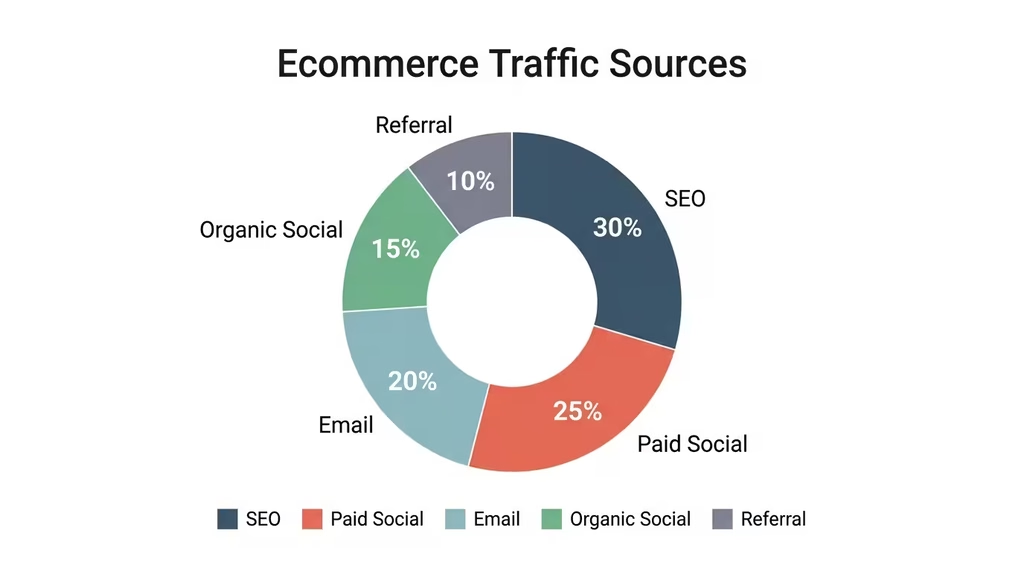
Meta Ads (Facebook and Instagram) Still the dominant channel for ecommerce advertising, with enormous targeting precision. CPM rates range from USD 5–20+ and CPC from USD 0.50–1.50 depending on niche and audience. Target a return on ad spend (ROAS) of at least 3–4x to operate profitably. Start with broad audiences, use video creatives, and let the algorithm optimise before narrowing targeting.
TikTok Ads: The fastest-growing paid channel for product-based businesses. TikTok’s algorithm shows ads to users based on behaviour patterns rather than solely demographic targeting, which means even new advertisers can reach highly relevant audiences at lower CPMs than Meta. Product videos that feel native to the platform (authentic, entertaining, fast-paced) dramatically outperform polished brand advertising.
Organic and Content Marketing
TikTok Organic: Possibly the most powerful free traffic source available to dropshippers in 2026. A single viral product video can generate thousands of store visits and orders overnight. Publish product demonstrations, unboxing videos, and “before and after” use cases consistently. Dropshipping stores with at least one active social media channel generate 32% more revenue on average than those without (SellersCommerce, 2025).
Search Engine Optimisation (SEO): SEO is a long-game channel that compounds over time. Optimising your product pages and publishing keyword-rich blog content builds organic traffic that costs nothing per visitor once established. 68% of all e-commerce website traffic comes from search, with organic at 53% of that total (Thunderbit, 2026). Start SEO from day one, even while paying for traffic.
Email Marketing: The highest ROI channel in e-commerce by a significant margin. Build your email list from your first visitor using pop-up forms, exit-intent offers, and post-purchase sequences. Established stores attribute 15–20% of total revenue to email marketing (ZIK Analytics, 2026). Use tools like Klaviyo or Omnisend for segmented, automated flows.
Influencer Marketing: Partnering with micro-influencers (5,000–100,000 followers) in your niche can drive high-quality traffic with strong purchase intent at a fraction of the cost of macro-influencer campaigns. Niche-specific creators have highly engaged audiences. Prioritise authentic fit over follower count.
The Marketing Launch Sequence
For a new store, this is the recommended sequencing:
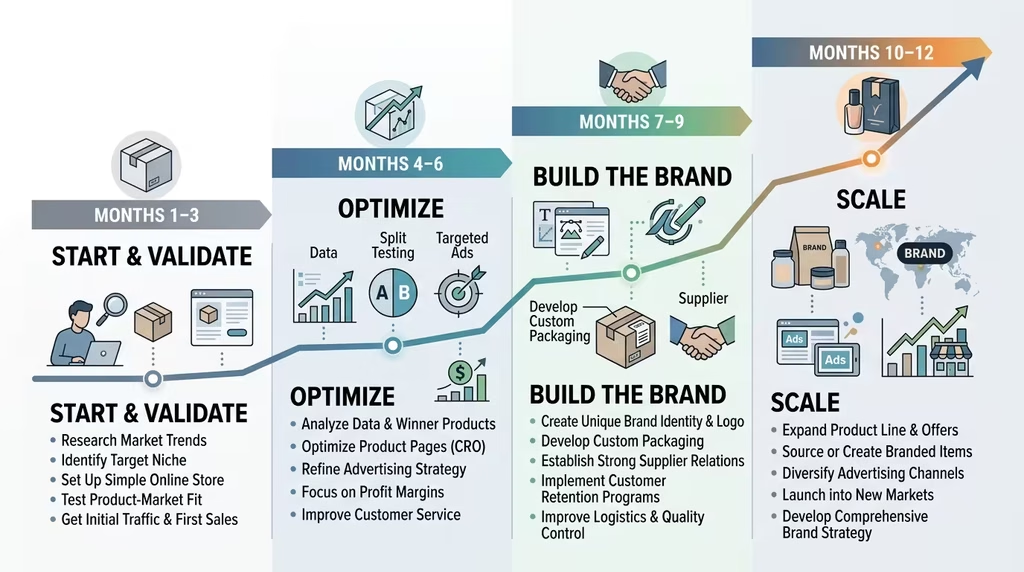
- Weeks 1–2: Organic TikTok content to test product resonance at zero cost.
- Weeks 3–4: Small Meta or TikTok ad tests (USD 30–50 per product) to identify winning products.
- Month 2: Scale budget on proven winners. Begin email list building. Start basic SEO.
- Month 3 onwards: Diversify channels, invest in content, and build retargeting audiences.
Step 9: Handle Orders, Returns, and Customer Service
The operational side of dropshipping is where many sellers lose customers they worked hard to acquire. Your supplier handles fulfilment, but the customer relationship belongs entirely to you. Every interaction after purchase is your responsibility.
Order Management
Once your volume grows, manual order processing becomes unsustainable. Tools like DSers, AutoDS, and Zendrop automate the supplier order placement process, inventory monitoring, and tracking number updates. Even at 10 orders per day, automation saves several hours weekly and eliminates costly manual errors.
Set up automated order confirmation and shipping notification emails from day one. Customers who receive proactive communication are significantly less likely to raise disputes. Stores that offer real-time tracking updates see 25% fewer refund or cancellation requests (ZIK Analytics, 2026).
Returns and Refund Policy
A transparent, fair returns policy is a conversion tool, not just an operational requirement. State clearly:
- The window for returns (14–30 days is standard)
- The condition items must be in
- Who covers return shipping costs
- The refund timeline once items are received
For many dropshipping stores, it is operationally simpler to offer a refund without requiring the physical return of low-cost items. The cost of return shipping often exceeds the product value, and allowing immediate refunds eliminates negative reviews and disputes. Calibrate this policy based on your product price range.
Customer Service Standards
In 2026, speed and tone in customer service are as important as resolution. Use these benchmarks:
- First response time: Under 24 hours for email, under 4 hours for live chat
- Resolution time: Within 48–72 hours for common issues
- Tone: Always calm, empathetic, and solutions-focused
Tools like Gorgias and Tidio integrate with Shopify to centralise customer communication and automate responses to common queries. Even as a solo operator, these tools make professional-level service manageable.
Step 10: Scale Your Dropshipping Business
Scaling is not just about spending more on ads. Sustainable scaling requires stronger unit economics, diversified traffic, better supplier relationships, and operational systems that do not collapse under increased volume.
Know Your Numbers Before You Scale
Before increasing ad spend, ensure your core metrics are healthy:
- Customer Acquisition Cost (CAC): The total marketing spend divided by customers acquired. This must be lower than your gross profit per order.
- Average Order Value (AOV): Increase this through product bundles, upsells, and cross-sells. A 20% AOV increase can transform unprofitable ad campaigns into profitable ones.
- Customer Lifetime Value (CLV): Repeat customers cost a fraction of what new customers cost to acquire. Email marketing, loyalty offers, and exceptional experiences drive CLV.
- Return Rate: High return rates signal product quality or expectation mismatch problems that will not improve with more traffic.
Scaling Strategies That Work
Horizontal expansion: Add new products within your validated niche. Test new items using the same audience and creative framework you already know works.
Channel diversification: If TikTok Ads are working, layer in Google Shopping. If Meta is your base, test Pinterest for visual products. Each additional channel reduces your dependency on any single platform.
Upgrade supplier relationships: High-volume sellers gain leverage to negotiate better pricing, faster fulfilment, and custom packaging with existing suppliers. Reaching out to negotiate once you hit 50+ monthly orders with a supplier is reasonable and often rewarded.
Move winning products to private label: Once a product has a consistent sales history, explore sourcing a private-label version with your branding. This removes direct price competition and builds defensible brand value. Product margins increase significantly, often from 25% to 50%+.
Build towards an owned audience: An email list, a YouTube channel, or an active community (Facebook Group, Discord, etc.) around your niche is the most valuable long-term asset a dropshipping brand can build. Owned audiences cost nothing to market to and are not subject to algorithm changes or ad cost inflation.
Common Mistakes That Kill Dropshipping Stores
Understanding failure modes is as valuable as understanding success strategies. These are the most common and most costly errors made by new dropshippers:
1. Choosing a niche based on personal interest alone, without data validation. Your passion for a product category does not guarantee market demand. Every niche must be validated with search data, competitor analysis, and margin assessment before commitment.
2. Skipping the sample order: Listing a product you have never seen or touched is a gamble with your customer’s trust. Always order samples to verify quality, realistic appearance, and shipping experience.
3. Competing purely on price: A race to the bottom on pricing destroys margins and attracts the worst type of customer. Compete on brand, experience, and curation instead.
4. Ignoring delivery expectations: Customers abandoned by 20-day shipping windows do not give second chances. If your supplier cannot fulfil orders within 10 days to your primary market, find a supplier who can, even if the margin is slightly lower.
5. Giving up after the first product test fails. Product research is an iterative process. Most experienced dropshippers tested 10–20 products before finding their first consistent winner. Failure at the product level is not business failure; it is market research.
6. Neglecting the post-purchase experience. The experience after the buy button is clicked determines whether you get a loyal repeat customer or a disputed charge. Order confirmation emails, shipping notifications, and proactive communication are not optional extras.
7. Running ads without a pixel or analytics in place: Advertising without tracking is spending money blindly. Install Google Analytics and your Meta Pixel before the first ad goes live. Every visitor interaction is data you can use to improve.
8. Using too many products from a single unreliable supplier: Diversify your supplier base. If your entire catalogue depends on one supplier and they go out of stock or disappear, your entire store is at risk.
Frequently Asked Questions
How much money do I need to start a dropshipping business in 2026? You can start with as little as USD 200–500, covering your platform subscription (Shopify Basic at USD 39/month), a domain name (USD 10–15/year), and a small initial ad budget. Most experienced dropshippers recommend having USD 500–1,000 available for the first three months of testing to give yourself enough runway to find a winning product before exhausting your budget.
How long does it take to make money with dropshipping? The realistic timeline for a first profitable month is 2–4 months for sellers who are consistent, strategic, and willing to iterate. Some see results in weeks with the right product and execution; others take six months. The 10% first-year success rate reflects sellers who gave up too early or never validated their niche, not sellers who applied a structured approach.
Is dropshipping legal in 2026? Yes, dropshipping is a fully legal retail model. You need to comply with the business registration, tax, and consumer protection laws of your home country and your customers’ countries. Selling counterfeit or trademarked products, making false advertising claims, or operating without a clear returns policy creates legal exposure.
Do I need a business registered to start dropshipping? Technically, you can begin testing with minimal formal structure. Practically, you need a registered business entity to open a proper business bank account, access major payment processors without restrictions, and operate at any meaningful scale. Register your business early to avoid disruptions later.
Which is better for dropshipping: Shopify or WooCommerce? For most beginners, Shopify wins on ease of use, app ecosystem, and operational reliability. WooCommerce is the stronger choice if you have WordPress experience, want lower long-term costs, or are building a heavily content-driven SEO strategy from the outset. Both are viable; the choice depends on your technical comfort level and business model.
What are the best dropshipping niches for beginners in 2026? Pet accessories, home office equipment, eco-friendly products, and tech accessories are widely regarded as strong starting points for beginners. They have steady demand, straightforward marketing angles, strong social media visual appeal, and manageable operational complexity. Avoid highly regulated categories like supplements, electronics with safety certifications, or anything with high return rates until you have more experience.
Can I dropship from Nigeria or other African countries internationally? Yes. Many successful dropshippers operate from Africa, serving US, UK, and European customers through Shopify stores. The key operational requirements are a working international payment solution (Payoneer, Stripe via a supported entity, or a business account in a supported country), reliable internet access, and a customer service approach that operates across time zones. Local Nigerian platforms like Jumia are also available for sellers targeting the domestic market.
How do I handle returns when I am a dropshipper? Define your returns policy clearly and communicate it upfront. For low-cost items, offering a replacement or refund without requiring a physical return is often the most efficient resolution. For higher-cost items, work with your supplier to establish a returns procedure. The customer’s complaint is always your responsibility, even when the supplier caused the problem. Your policy should be fair, clear, and faster than your customer’s patience.
What profit margins should I expect from dropshipping? Standard dropshipping margins sit between 15–30% of the sale price after paying the supplier. After factoring in advertising costs, platform fees, and refunds, a net profit margin of 10–20% on revenue is healthy. High-ticket dropshipping and private-label products can push margins to 30–50%, which is why experienced operators graduate toward these models as they scale.
Is AI changing dropshipping in 2026? Significantly. AI tools are being used across product research (predictive trend analysis), customer service (AI chatbots handling common queries), ad creative generation, pricing optimisation, and demand forecasting. Automation platforms like AutoDS use AI to monitor supplier prices and stock levels in real time, adjusting your store listings automatically. Dropshippers who integrate AI into their operations report meaningful efficiency and profitability gains compared to manual approaches.
Dropshipping in 2026 is not easy. It has never been easier to start, but it has also never required more intentionality to succeed. The window is wide open for entrepreneurs willing to build real brands, serve specific audiences well, and operate their stores like professionals rather than side hustles.
The framework is clear: choose a data-validated niche, source from reliable suppliers, build a store that earns trust, invest in consistent marketing, and treat every post-purchase interaction as an opportunity to create a loyal customer. These are not complex ideas. They are the ones that separate the 10% who build profitable businesses from the 90% who try once and walk away.
Your starting point is a decision. Decide on a niche this week. Order samples this month. Launch your store this quarter. The market is growing at 22% annually. The customers are already online. The suppliers are already set up. Everything that was ever complicated about retail- the warehouse, the staff, and the stock- has been removed from the equation.
What you do with that freedom is entirely up to you.
Ready to start? Share this guide with someone building their ecommerce business, leave a comment with your niche idea below, or explore our related guides on product research tools, email marketing for ecommerce, and building a brand from scratch.